You Won’t Believe What I Saw in Novosibirsk — A Quiet Beauty That Stole My Heart
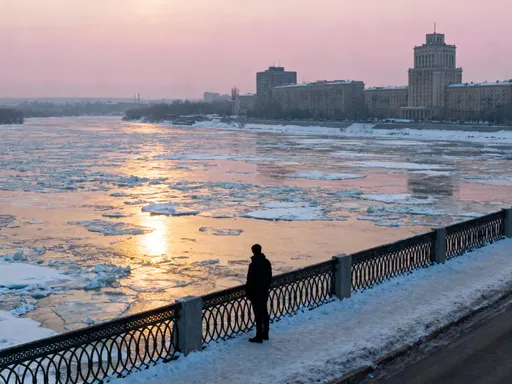
When I told friends I was heading to Novosibirsk, most blinked twice. “Why?” they asked. Honestly, I didn’t have a grand reason — just curiosity. But what I found wasn’t just another Siberian city lost on the map. It was a place where quiet streets hide deep stories, where the Ob River glows at dusk, and where culture pulses in unexpected corners. This is not a tourist hotspot, but that’s exactly why it’s special. Far from the polished facades of more famous destinations, Novosibirsk offers something increasingly rare: authenticity. Here, life unfolds without performance, and beauty reveals itself slowly, like sunlight creeping across a snow-covered square at dawn. For travelers weary of crowds and clichés, this city whispers a different invitation — one of stillness, substance, and surprise.
Why Novosibirsk? Breaking the Myth of Nowhere
Most travelers passing through Russia focus on Moscow’s golden domes or St. Petersburg’s baroque elegance, leaving Siberia dismissed as a frozen expanse best crossed quickly by train. Novosibirsk, however, defies that narrow view. As Russia’s third-largest city and a major hub in Siberia, it is far from the empty, lifeless landscape some imagine. Nestled along the Ob River and intersected by the legendary Trans-Siberian Railway, it serves as a vital cultural and scientific crossroads between Europe and Asia. Founded in 1893 as a stop along the railway, the city grew rapidly, evolving into a center of innovation, education, and artistic expression.
What makes Novosibirsk truly compelling is not its size, but its quiet confidence. It doesn’t try to impress. There are no extravagant tourist traps or manufactured experiences. Instead, visitors encounter a city that lives for itself — where residents stroll in parks year-round, students debate philosophy in warm cafés, and scientists shape the future in research institutes just outside the city center. This lack of performative tourism is precisely what gives it authenticity. For women in their 30s to 50s who value meaningful travel — experiences that resonate long after the journey ends — Novosibirsk offers a rare depth. It’s a place to observe daily life in motion, to witness resilience and creativity in a climate that demands both.
The city’s role as a scientific and academic capital adds another layer of intrigue. Home to numerous universities and research centers, Novosibirsk pulses with intellectual energy. Yet, this seriousness is balanced by a surprising warmth in its people and a respect for tradition, from folk music performances to seasonal festivals celebrating harvests and winter solstice. Travelers who take the time to look beyond surface impressions discover a city that values knowledge, community, and quiet dignity — qualities that feel increasingly precious in a fast-moving world.
First Impressions: Stepping Off the Train into a Winter Dream
Arriving at Novosibirsk-Glavny station just after dawn, I stepped onto the platform with a breath that fogged instantly in the cold air. The city stretched out in soft hues of gray and white, blanketed in fresh snow that muffled every sound. Steam curled from grates in the sidewalk, and locals hurried past in thick coats, fur hats pulled low, their footsteps crunching on salted paths. There was no rush of tour buses or crowds of fellow travelers — just the quiet hum of a city waking up. Unlike the frenetic pace of Moscow or the theatrical grandeur of St. Petersburg, Novosibirsk felt grounded, real, unpretentious.
As I walked toward the city center, the first landmark to appear was the Novosibirsk Opera and Ballet Theatre, its neoclassical columns capped with snow, like frosting on a grand cake. Even half-buried in winter, the building radiated dignity. The cold was sharp — well below freezing — but the air felt clean, almost clarifying. It was the kind of cold that makes you feel alive, that forces you to slow down and pay attention. That first morning set the tone for the entire visit: serene, introspective, and unexpectedly beautiful.
What struck me most was the absence of noise — not just in sound, but in sensation. There were no billboards shouting for attention, no crowds jostling for selfies, no pressure to “see it all.” Instead, the city invited observation. I watched an elderly couple share a thermos on a park bench, their breath rising in tandem. I passed a street musician playing an accordion under an archway, his music echoing softly against stone walls. These small moments, unscripted and unhurried, formed the heart of my experience. Novosibirsk doesn’t offer postcard perfection — it offers presence. And in that presence, I found a kind of majesty that louder cities often lack.
The Ob River: A Living Spine Through the City
The Ob River is not just a geographic feature — it is the soul of Novosibirsk. Flowing wide and steady through the heart of the city, it shapes life in ways both practical and poetic. In winter, the river freezes into a vast expanse of ice, transforming into a natural park where locals fish, skate, and even drive cars across designated routes. In summer, its banks become green corridors for walking, cycling, and picnicking, with families spreading blankets and children chasing kites in the breeze. No matter the season, the river serves as a constant reminder of nature’s rhythm, cutting through the urban landscape like a thread of continuity.
One of the most memorable experiences was walking along the river from the Bugrinsky Bridge, a modern structure with a graceful arch that spans the water. From its pedestrian path, the view stretches endlessly — on one side, the orderly blocks of the city; on the other, forests and meadows that seem untouched by time. In late spring, I took a short river cruise operated by a local tour company. As the boat glided along, the reflections of Soviet-era apartment buildings shimmered on the water’s surface, their geometric facades softened by light and motion. The sight was absolutely stunning — a quiet harmony between human design and natural beauty.
But the river’s true significance lies in how it’s woven into daily life. Fishermen arrive before sunrise, drilling holes through the ice and waiting in silence, wrapped in layers. In warmer months, cyclists race along the embankment, while artists set up easels to capture the shifting light. The river doesn’t demand attention — it simply exists, steady and reliable, like a heartbeat. For visitors, walking its banks offers one of the best ways to understand the city’s character: resilient, calm, and deeply connected to its environment. It’s not a backdrop — it’s a companion.
Art and Science Collide: Akademgorodok’s Hidden Genius
Just a short train ride south of Novosibirsk lies Akademgorodok — a unique scientific town founded in the 1950s as a Soviet-era center for research and innovation. Unlike typical cities, Akademgorodok was designed as a community for intellectuals, with research institutes nestled among forests and lakes. Today, it remains a place where science and nature coexist in quiet harmony. Walking its tree-lined streets, I felt a different energy — one of contemplation and discovery. Researchers live in modest homes, children play near open-air sculptures, and small museums dot the landscape like hidden treasures.
One of the most remarkable visits was to the Institute of Nuclear Physics, where tourists are allowed to view the main experimental hall from an elevated platform. Below, massive machines hummed with quiet power, their intricate systems glowing faintly under industrial lights. I spoke briefly with a young physicist who explained the work in simple terms — research into plasma and particle acceleration — and her passion was palpable. This is a place where big questions are asked every day, not in isolation, but as part of a community that values knowledge and collaboration.
The cultural life here is equally thoughtful. Cafés near the university buzz with students debating cosmology, literature, and environmental policy over strong tea and pastries. I attended a small concert in a repurposed lecture hall, where a string quartet played Shostakovich with such intensity that the room seemed to hold its breath. Akademgorodok doesn’t offer flashy attractions, but it offers something rarer: a space where beauty and intellect meet. For travelers who appreciate depth over spectacle, this is a destination within a destination — a reminder that the most meaningful experiences often happen off the beaten path.
Cultural Windows: Theaters, Museums, and Quiet Moments
Novosibirsk doesn’t advertise its culture — it lives it. Nowhere is this more evident than at the Novosibirsk Opera and Ballet Theatre, one of the largest and most acoustically advanced in Russia. I attended a performance of Tchaikovsky’s Eugene Onegin, and from the first note, I was captivated. The voices filled the grand hall with a richness that felt almost physical — thunder wrapped in velvet, as one critic once described it. The production was elegant but not overdone, allowing the music and emotion to take center stage. What moved me most was the audience: older couples in coats, young students with notebooks, all listening with rapt attention. This wasn’t entertainment as distraction — it was art as shared experience.
Beyond the opera, the city offers quieter cultural encounters. I spent an afternoon at the Novosibirsk State Art Museum, where collections range from 19th-century Russian landscapes to contemporary Siberian works. One exhibit featured textiles and embroidery from indigenous groups in the region — intricate patterns that told stories of migration, seasons, and survival. Each piece felt like a whispered history, preserved with care.
Another memorable stop was the Railway History Museum, located near the main station. Inside, vintage locomotives stand like gentle giants, their brass fittings polished, their stories documented in handwritten logs. I watched a grandfather explain the workings of a steam engine to his wide-eyed grandson, using gestures and simple words. Moments like these — intergenerational, unhurried, meaningful — are common in Novosibirsk. The city’s museums and galleries don’t just display artifacts; they facilitate connection. Whether it’s a painting, a train, or a folk costume, each object becomes a window into a life, a time, a place.
Practical Magic: Getting Around, Staying Warm, and Connecting Locally
Traveling in Novosibirsk is easier than many expect, especially with a little preparation. The city’s metro system is efficient, deep underground — a necessity in the winter — and its stations are beautifully tiled, some resembling underground palaces. I used Yandex Maps, the most reliable navigation app in the region, which provided real-time transit updates and walking directions. While English isn’t widely spoken, a few basic Russian phrases — like “spasibo” (thank you) and “izvinite” (excuse me) — opened many doors. Smiles, I found, were a universal language.
Accommodations ranged from international business hotels to cozy guesthouses run by local families. I chose a small hotel near Lenin Square, central and quiet, with heated floors and thick curtains that blocked out the early morning light. It was clean, warm, and surprisingly affordable. Dining was another highlight — I ate hearty bowls of borscht in family-run restaurants, where the soup was made with beets from a nearby village. Pelmeni, Siberian dumplings, were another favorite, served with sour cream and fresh dill.
One of the most rewarding experiences was visiting a chaynaya, a traditional tea room, where locals gather to drink tea, share sweets, and talk for hours. I was invited to join a table by an older woman who noticed I was alone. We didn’t speak the same language well, but we communicated through gestures, shared food, and laughter. She showed me photos of her grandchildren on her phone, and I showed her pictures from my home. These spontaneous connections, born of simple kindness, became the heart of my trip. For women who travel to understand, not just to see, Novosibirsk offers the gift of genuine human warmth.
Why This City Stays With You: The Quiet Afterglow
I didn’t expect to feel nostalgia for Novosibirsk. But weeks after returning home, I still find myself remembering small details: the frost on tree branches like lace, the golden glow of streetlights on fresh snow, the silence between distant train whistles. It’s not the landmarks that linger — it’s the atmosphere. In a world obsessed with “must-see” destinations and Instagrammable moments, Novosibirsk stands apart. It doesn’t demand to be seen — it invites you to be still, to notice, to feel.
What makes this city unforgettable is its quiet authenticity. There are no crowds, no pressure, no performance. Life here unfolds with dignity and resilience, shaped by long winters and deep traditions. For travelers ready to look beyond the surface, Novosibirsk offers a rare gift: the beauty of being nowhere famous — and everywhere meaningful. It proves that the most powerful viewing experiences happen not in spectacle, but in stillness.
In the end, my journey wasn’t about checking a destination off a list. It was about rediscovering the value of slowness, of presence, of connection. For women who travel not just to escape, but to understand — to return home with a fuller heart — Novosibirsk is a quiet revelation. It doesn’t shout. It doesn’t dazzle. But if you listen closely, you’ll hear it: a whisper of beauty, steady and true, beneath the snow.