You Won’t Believe These Hidden Natural Escapes Behind Valletta’s Stone Walls
You know what I didn’t expect in Valletta? Wild sea cliffs, secret coves, and coastal trails with views that take your breath away. I thought it was just about forts and churches—turns out, the real magic lies just beyond the city’s ancient walls. This tiny capital sits on a dramatic peninsula, backed by raw Mediterranean landscapes most tourists completely miss. Nestled between fortified bastions and bustling harbors, there’s a quieter, wilder side of Malta waiting to be discovered. From hidden garden overlooks to rugged footpaths tracing the edge of the continent, these natural escapes offer serenity, beauty, and a deeper connection to the island’s essence. Let me show you the untamed side of Malta you won’t find in guidebooks.
Valletta’s Urban Facade vs. Its Natural Backdrop
Valletta is celebrated as a UNESCO World Heritage Site, a masterpiece of 16th-century military architecture shaped by the Knights of St. John. Its narrow limestone streets, grand cathedrals, and ornate palaces draw thousands of visitors each year, all eager to walk through centuries of European history. The city’s golden stone glows under the Mediterranean sun, its skyline punctuated by domes and fortifications that speak of resilience and grandeur. Yet, for all its cultural richness, Valletta’s physical setting is equally remarkable—perched on the tip of the Sciberras Peninsula, it is surrounded on three sides by the open sea, with dramatic drops to rocky coastlines that few ever explore.
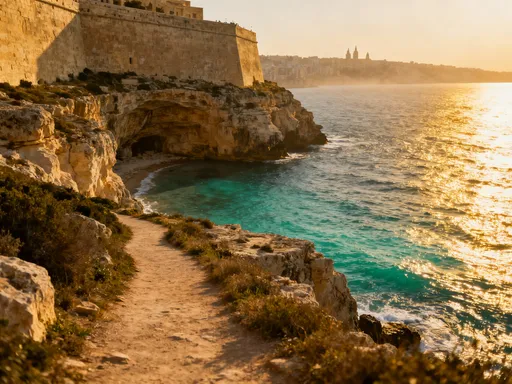
What many don’t realize is that this fortified capital is not just an urban artifact—it is a gateway to natural beauty. While most tourists focus on the city’s interior, the true geographical drama unfolds just beyond the ramparts. The peninsula juts into the Mediterranean with steep limestone cliffs, tidal inlets, and windswept headlands that remain largely untouched by commercial development. These areas are not marked by souvenir shops or crowded tour stops, but by the sound of waves crashing against ancient rock and the sight of gulls circling above deep blue waters. It’s a landscape shaped by time, tides, and geology, offering a powerful contrast to the ordered symmetry of Valletta’s streets.
This duality—between human craftsmanship and natural force—is what makes Valletta so unique. The city was built to dominate the sea, yet it exists in constant dialogue with it. The same winds that carried warships now carry seabirds; the same cliffs that once served as lookouts now provide vantage points for quiet contemplation. Understanding this balance transforms the way one experiences the city. Rather than seeing Valletta as a standalone monument, travelers begin to appreciate it as part of a larger, living landscape—one where history and nature coexist in unexpected harmony.
The Secret of the Barrakka Gardens’ Edge
At first glance, the Upper and Lower Barrakka Gardens appear to be elegant public spaces—manicured lawns, symmetrical flowerbeds, and classical fountains that reflect the city’s baroque sensibilities. They are often visited for their panoramic views of the Grand Harbour, where cruise ships glide past historic fortresses. But beyond their ornamental charm lies a subtler, more profound experience: the moment you step to the edge and look not inward, but outward—toward the open sea. It is here, along the stone parapets, that Valletta’s natural surroundings begin to reveal themselves.
The gardens function as quiet thresholds between the city and the coast. As you walk along their outer rim, the sounds of traffic fade, replaced by the distant crash of waves and the whisper of sea breezes. On clear days, the Mediterranean shifts through a spectrum of blues—from deep sapphire near the horizon to translucent turquoise where sunlight penetrates shallow waters. The contrast between the cultivated greenery and the untamed sea beyond creates a sense of layered beauty: one shaped by human hands, the other by elemental forces. It’s a place where visitors can pause, breathe, and begin to notice details often overlooked—the way light dances on water, how clouds drift over Comino, or the sudden flash of a diving tern.
What makes the Barrakka Gardens particularly significant is their role as an introduction to coastal awareness. They do not demand attention like a museum or monument; instead, they invite reflection. Parents sit with children watching the Saluting Battery cannon fire, unaware that behind them, the sea is performing its own silent spectacle. Photographers frame shots of the harbor, missing the wilder vista just to the side. Yet for those who turn their gaze seaward, the gardens become a portal—a gentle nudge toward the natural world that lies just beyond Valletta’s stone embrace. In this way, they serve not only as a place of rest but as a subtle teacher, awakening travelers to the beauty that awaits beyond the city’s core.
Walking the Sliema Promenade to Ta’ Xbiex: A Waterfront Revelation
One of the most accessible yet underappreciated experiences near Valletta is the waterfront walk from the ferry terminal in Sliema to the quieter marina district of Ta’ Xbiex. While Sliema is often seen as a modern, bustling town with shopping streets and cafes, the promenade that traces its coastline offers a surprisingly serene encounter with nature. As you leave the ferry behind and follow the paved path, the rhythm of the city begins to soften. The air carries a salty freshness, and the sight of fishing boats bobbing in sheltered coves replaces the constant motion of urban life.
What makes this route special is the way it blends urban infrastructure with natural elements. The path is lined with native Mediterranean vegetation—hardy shrubs like capers and sea lavender that cling to rocky crevices, their resilience a testament to the island’s climate. Along the shore, exposed limestone formations reveal layers of geological history, shaped by millennia of wave action. At low tide, small pools form in the rock, creating temporary habitats for crabs, sea urchins, and tiny fish. Children often crouch at the water’s edge, fascinated by this miniature ecosystem, while adults pause to watch the play of light on wet stone.
Despite being just minutes from central Sliema, the promenade feels removed from the noise and pace of daily life. The gentle lapping of waves, the cry of gulls, and the occasional splash of a jumping mullet create a soundscape that is both calming and alive. Boats of all sizes—yachts, dinghies, and weathered fishing vessels—drift in and out of the marina, their movements dictated by tide and wind rather than schedules. This harmony between human activity and natural rhythm is rare in modern travel, yet it is precisely what makes the walk so restorative.
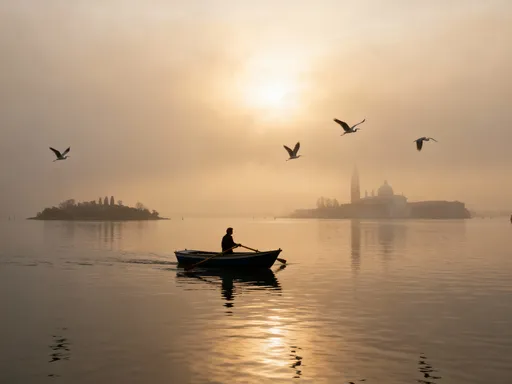
For visitors seeking a peaceful start or end to their day, this stretch offers more than just a scenic view. It provides a chance to slow down, observe, and reconnect with the elemental presence of the sea. It reminds us that even in developed areas, nature persists—not as a backdrop, but as an active, breathing part of the environment. Whether you walk at sunrise, when mist hovers over the water, or at dusk, when the sky melts into gold and violet, the experience is one of quiet revelation: beauty does not always require remoteness; sometimes, it is hidden in plain sight, along a simple coastal path.
Fort Saint Elmo to Dragut Point: Coastal Drama You Can’t Miss
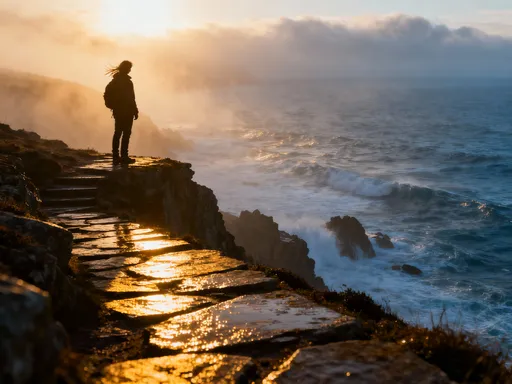
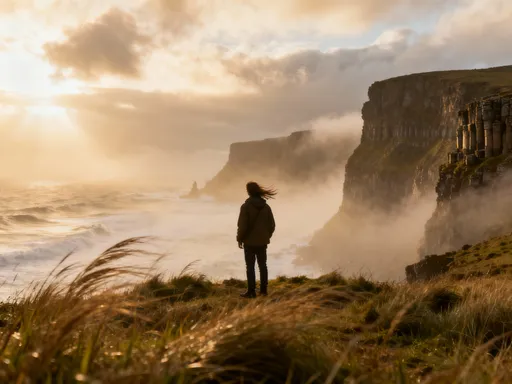
At the very tip of the Valletta peninsula stands Fort Saint Elmo, a star-shaped fortress that has guarded the harbor since the 16th century. Most visitors enter through its grand gates, focused on its military museum and historic ramparts. But few continue beyond the fort to the rugged headland known as Dragut Point, where the land falls away into the open sea. This stretch of coastline is one of the most dramatic in the Maltese Islands, where sheer limestone cliffs meet the Mediterranean in a display of raw, unfiltered power.
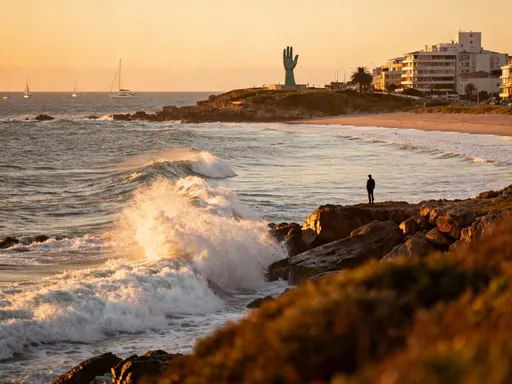
The natural landscape here defies the controlled order of the fort. Waves surge against the base of the cliffs, sending sprays of white foam high into the air. The rock itself is pitted and eroded, sculpted by wind and salt into fantastical shapes—arches, caves, and overhangs that change with every storm. Seabirds nest in the crevices, their calls echoing against the stone. On calm days, the water below is so clear that you can see the dark outlines of submerged rocks and the occasional shadow of a passing fish. It’s a place where the forces of nature feel immediate and undeniable.
What makes this area even more compelling is the contrast between its military past and its wild present. The cannons that once faced enemy fleets now point toward a seascape of breathtaking beauty. The same vantage points used for surveillance are now perfect for watching sunsets that set the water ablaze in shades of orange and crimson. Early in the morning, when the light is soft and the wind is still, the sea has a glassy quality, reflecting the sky like a mirror. Late in the afternoon, as the sun dips lower, the spray from breaking waves catches the light, creating fleeting rainbows that hang in the air like promises.
Walking this edge requires no special equipment—just comfortable shoes and a willingness to look beyond the expected. There are no ticket booths, no guided tours, no souvenir stands. Just the sea, the wind, and the timeless presence of the land meeting the water. For those who take the time to visit, Dragut Point offers a rare kind of travel experience: one that is not about consumption, but about presence. It’s a reminder that some of the most powerful moments in a journey come not from seeing famous sites, but from standing at the edge of the world and feeling the pulse of the planet beneath your feet.
The Hidden Trail to Tigné Point and Beyond
Just beyond Sliema, the coastline curves toward Tigné Point, a slender promontory that marks the transition from urban development to more secluded natural spaces. While the area around The Point shopping center is lively and modern, a little further along, the path becomes quieter, less traveled. Here, a series of footpaths trace the edge of the peninsula, offering uninterrupted views of the open sea and the islands of Manoel and Comino in the distance. These trails are not widely advertised, but they are easily accessible and perfectly suited for casual walkers, joggers, and photography enthusiasts.
One of the most rewarding aspects of this route is the sense of discovery it fosters. As you leave the busier sections behind, the sounds of the city fade, replaced by the rhythm of the waves and the rustle of coastal plants in the breeze. The path winds along rocky outcrops, with stone railings providing safety without obstructing the view. At certain points, the land narrows, creating natural vantage spots ideal for pausing and taking in the horizon. On clear days, you can see all the way to Gozo, its silhouette rising from the sea like a distant dream.
Birdwatchers will find this area particularly rewarding. The cliffs and offshore islets serve as resting points for migratory birds, especially during spring and autumn. Flocks of shearwaters, terns, and even the occasional peregrine falcon can be spotted riding the coastal thermals. The sea itself is alive with movement—dolphins are occasionally seen in the distance, their dorsal fins breaking the surface in fleeting glimpses. Even without spotting wildlife, the act of scanning the horizon fosters a meditative state, a quiet focus that is increasingly rare in modern travel.
Safety is well maintained along these paths, with clear signage and sturdy railings in exposed areas. The terrain is mostly flat and paved, making it suitable for families and older travelers. Benches are placed at intervals, inviting rest and reflection. What makes this trail truly special is its accessibility—it offers the feeling of remote coastal exploration without requiring a long journey or difficult hike. It’s proof that even in a small, densely populated country like Malta, there are still quiet corners where nature takes center stage.
Boat Excursions from Valletta’s Marina: Discovering Hidden Coves
While walking the coastline offers one perspective, seeing it from the water reveals an entirely different dimension. Small-scale, eco-friendly boat tours departing from Valletta’s marina provide an intimate way to explore the hidden coves and sea caves that are inaccessible by land. These excursions, typically led by local captains with deep knowledge of the coast, take travelers along the base of the cliffs, where the full scale of the limestone formations becomes apparent.
One of the most striking features visible from the sea is the network of natural caves and arches carved by erosion. Near Manoel Island, the rock face is honeycombed with grottoes, some large enough to paddle into with a kayak. The water inside these caves often glows with an ethereal blue light, a phenomenon caused by sunlight refracting through the submerged openings. Known locally as “blue grottos,” these spaces shift in color and intensity depending on the time of day and weather conditions. On sunny afternoons, the effect is dazzling; on overcast days, it becomes more mysterious, like something from a myth.
These boat trips also offer a chance to see Malta’s underwater topography. In areas with clear visibility, the seabed is visible just a few meters below, revealing rocky ridges, seagrass meadows, and the occasional school of fish darting between boulders. Some operators include snorkeling stops in sheltered bays, allowing guests to experience the marine environment firsthand. The water is typically calm in the summer months, making it safe for swimmers of all levels.
What sets these excursions apart is their low-impact approach. Unlike large tourist boats, these smaller vessels carry only a handful of passengers, minimizing noise and disturbance to wildlife. Captains often share stories about the coastline’s history and ecology, turning the journey into an educational experience. For many travelers, this perspective—floating just above the waves, surrounded by cliffs and sky—creates a deep sense of connection to the island. It’s not just about seeing new places; it’s about feeling the scale of the sea, understanding the power of erosion, and appreciating the delicate balance between land and water.
Why These Natural Spaces Matter for the Modern Traveler
In an age of crowded attractions and fast-paced itineraries, the quiet natural spaces around Valletta offer something increasingly rare: stillness. They are not designed for mass tourism, nor do they compete with famous landmarks. Instead, they provide a counterbalance—a chance to step away from the curated experiences and reconnect with the raw, unscripted beauty of the world. For the modern traveler, this is not a luxury; it is a necessity.
These landscapes enhance, rather than distract from, cultural immersion. Standing on a cliff overlooking the sea, one gains a deeper understanding of why the Knights built their forts here, why fishermen have returned to these shores for generations, and how the Maltese people have lived in dialogue with the Mediterranean for thousands of years. The history of Valletta is not confined to its buildings; it is written in the tides, the wind, and the very shape of the land. To experience both the city and its natural edges is to understand Malta in its fullness.
Moreover, these spaces offer a form of emotional restoration. Studies have shown that time spent near water—what researchers call “blue space”—can reduce stress, improve mood, and enhance mental clarity. In a world where digital noise is constant, the simplicity of watching waves or listening to seabirds becomes a form of quiet healing. For women in their 30s to 55s—many of whom juggle family, work, and personal well-being—such moments are not indulgent; they are essential.
Travel has the power to transform, but transformation does not always come from ticking off landmarks. Sometimes, it comes from standing at the edge of a cliff, feeling the wind on your face, and realizing how small yet connected you are to something vast. These natural escapes around Valletta offer exactly that: not just scenery, but soul. They remind us that the best journeys are not only about where we go, but how we feel when we get there.
Valletta isn’t just a museum of history—it’s a launchpad to natural wonder. The island’s soul isn’t only carved in stone; it’s written in the waves, the wind, and the wild edges few take time to see. When you visit, don’t just admire the fortifications—look beyond them. Because the true beauty of Malta lies where the city meets the untamed sea.