You Won’t Believe How Salvador’s Rhythm Slowly Changed Me
I didn’t come to Salvador for the postcard views or the checklist attractions. I came to feel something real. What I found was deeper than samba beats and colorful colonial streets—I discovered a city that breathes through its art, faith, and soulful resistance. Moving slowly here wasn’t just a travel choice; it became a way to truly listen. This is not a rushed highlight reel. It’s about how culture unfolds when you stop chasing and start staying.
Arrival in Pelourinho: First Impressions vs. Lasting Truths
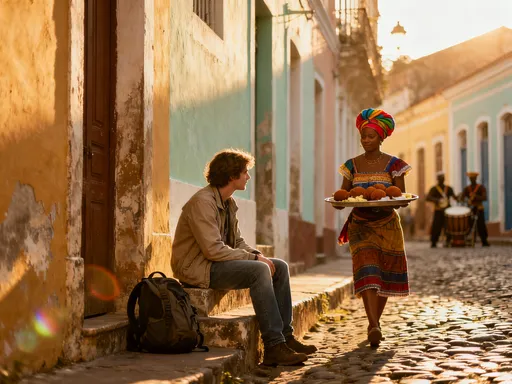
Stepping into the heart of Pelourinho for the first time is like stepping into a dream painted in bold, sunlit colors. The historic center of Salvador, perched atop a hill overlooking the Bay of All Saints, greets visitors with pastel-hued colonial buildings, intricate ironwork balconies, and cobblestone streets worn smooth by centuries of footsteps. Tourists flock here for the UNESCO World Heritage designation, the photogenic plazas, and the promise of Afro-Brazilian culture. But what many don’t realize is that Pelourinho is not a museum frozen in time—it is a living, breathing neighborhood where history pulses beneath everyday life.
The initial thrill of seeing drummers in white uniforms marching through the square or hearing the distant echo of a berimbau fades after a few hours. What remains is something quieter but far more profound: the rhythm of a community that has preserved its identity against centuries of adversity. The plaza that seems like a stage for performance during the day transforms at dusk into a space of gathering, where elders sit on benches sharing stories, children kick soccer balls between columns, and neighbors call out greetings across balconies. This is where slow travel begins—not with sightseeing, but with presence.
Spending days rather than hours in Pelourinho reveals layers often missed by the passing eye. A church that appears ornate from the outside holds coded symbols of resistance in its carvings, blending Catholic imagery with Yoruba deities. A street vendor selling coconut water isn’t just offering refreshment; she’s part of a lineage of women who have worked these corners for generations. Time slows when you stop rushing from one landmark to the next. You begin to notice how music emerges not on schedule, but as needed—when a group of teenagers pulls out a surdo drum to lift the afternoon, or when a grandmother hums a lullaby while sweeping her doorstep. These are not performances for tourists. They are expressions of a culture that refuses to be silenced.
Living in this space, even briefly, shifts your understanding of what it means to witness a place. It’s no longer about capturing the perfect photo or checking off attractions. It becomes about listening—to the language, the silences, the laughter that rises after a shared joke in rapid-fire Bahian Portuguese. It’s about recognizing that the soul of Salvador isn’t found in monuments, but in the way people move through their world with pride, resilience, and an unshakable sense of belonging.
The Art That Lives in the Streets: Murals, Music, and Meaning
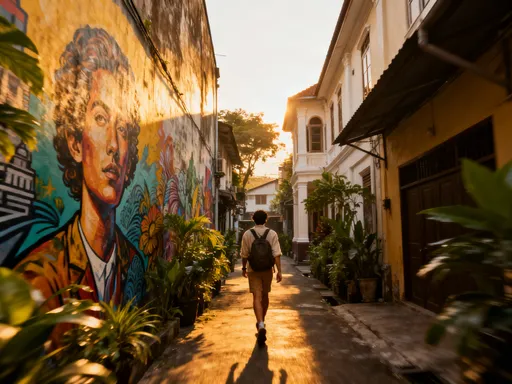
In Salvador, art is not something you visit—it surrounds you, challenges you, and comforts you all at once. It climbs the walls in vibrant murals depicting ancestors, warriors, and everyday heroes. It echoes in alleyways where young musicians rehearse samba-reggae rhythms on homemade instruments. It floats through the air during festivals when dancers in flowing costumes move as if carried by the wind. This is art as both testimony and transformation, born from a history of struggle and sustained by a fierce commitment to cultural preservation.
The neighborhood of Liberdade, one of the oldest Black urban communities in the Americas, stands as a canvas of resistance and celebration. Its walls are covered in murals that tell stories of slavery, emancipation, and the ongoing fight for racial justice. One striking piece shows a woman with eyes closed, her braided hair morphing into tree roots that stretch across the entire block—symbolizing the deep connection between Afro-Brazilian identity and the land. Another portrays a child holding a book in one hand and a drum in the other, a quiet declaration that knowledge and culture go hand in hand. These are not decorative additions to the cityscape; they are public declarations of memory and pride.
Equally powerful is the music that flows through Salvador like an underground river. Near the Elevador Lacerda, which connects the upper and lower cities, informal drum circles form almost daily. Men and women, some in their teens, others in their sixties, gather with surdos, repiques, and agogôs—percussion instruments central to samba-reggae. They don’t perform for tips or fame. They play because the rhythm is in their blood, passed down from ancestors who used drums to communicate, to mourn, and to resist. When you sit and listen—not just with your ears but with your body—you begin to feel the weight and joy contained in each beat.
Engaging with this art requires more than observation. It demands time and humility. A photographer might capture a stunning image of a mural, but only someone who lingers long enough to speak with the artist learns that the painting was created in memory of a cousin killed by police violence. A tourist might record a video of a drum circle, but only someone who returns day after day begins to understand the unspoken rules of participation—who leads, who follows, when it’s appropriate to join in. These moments of connection, built slowly and respectfully, transform art from spectacle into shared human experience.
Sacred Spaces and Silent Observations: Candomblé and Cultural Respect
At the core of Salvador’s cultural identity lies Candomblé, a spiritual tradition rooted in the beliefs of West African peoples brought to Brazil during the transatlantic slave trade. Unlike religions practiced in large public temples, Candomblé thrives in small, family-run terreiros—sacred spaces often hidden behind unassuming doors in residential neighborhoods. These are not tourist attractions. They are places of deep reverence, where rituals connect the living with ancestors and orixás, the divine forces of nature.
Visitors are rarely invited inside active ceremonies, and for good reason. Candomblé has survived centuries of persecution, including outright bans and violent suppression. Even today, practitioners face discrimination, and the religion remains deeply private. Yet, slow travel creates space for respectful understanding. By building relationships with locals, attending public festivals like Lavagem do Bonfim—the annual washing of the church steps in honor of both Catholic and Candomblé traditions—travelers can witness aspects of the faith without intruding.
One January morning, I stood among thousands as women in white lace dresses and wide-brimmed hats carried buckets of scented water up the long staircase of the church. The air was thick with jasmine and orange blossom. Drummers played rhythms dedicated to Oxalá, the father of all orixás. Though the event takes place at a Catholic church, its origins are firmly rooted in Candomblé practice. Watching silently, I realized that true cultural appreciation isn’t about gaining access to everything. It’s about recognizing the boundaries that protect sacred traditions and honoring them with quiet presence.
Conversations with locals revealed deeper layers. A shopkeeper in Pelourinho explained that her grandmother was a mãe de santo—a spiritual leader—and that many families maintain altars in their homes, lighting candles and offering food in private rituals. She spoke of faith not as a doctrine, but as a thread woven through daily life—something that guides decisions, heals wounds, and strengthens community. Listening to her, I understood that to truly grasp Salvador’s spirit, one must move beyond the visible. Some truths are not meant to be seen, only felt through patience, respect, and the willingness to learn without demanding.
Beyond the Guidebook: Finding Hidden Studios and Local Workshops
While guidebooks highlight museums and historic sites, Salvador’s creative soul flourishes in quieter corners—small studios tucked into side streets, family workshops where wood is carved into sacred figures, and textile ateliers where cotton is dyed with natural pigments. These spaces are not designed for mass tourism. They thrive on connection, continuity, and the slow transmission of knowledge from one generation to the next.
In the neighborhood of Santo Antônio Além do Carmo, I found a modest studio where a sculptor named Elias carves wooden masks used in Afro-Brazilian religious and cultural performances. His hands, marked by years of chiseling, moved with precision as he shaped a face representing Ogum, the orixá of iron and war. He welcomed me not as a customer, but as a guest, offering coffee and stories. Over several hours, he explained the symbolism behind each feature—the raised brow signaling vigilance, the open mouth calling for justice. His workshop wasn’t just a place of production; it was a classroom, a sanctuary, and a bridge to ancestral memory.
Elsewhere, in a courtyard in Rio Vermelho, a collective of women weaves intricate patterns into cloth using techniques passed down from their grandmothers. The designs—geometric shapes, waves, and celestial motifs—carry meanings tied to protection, fertility, and spiritual balance. One artist, Maria, showed me how indigo dye is extracted from plants grown in their garden. “This blue,” she said, stirring the vat, “is the color of the night sky when the spirits are most present.” Buying a scarf here isn’t a transaction. It’s an acknowledgment of labor, history, and resilience.
These experiences are only possible when travel slows down. Rushing through the city means missing the unmarked door with a hand-painted sign, the invitation to return “when the new batch of dye is ready,” or the chance to sit with an artist as they reflect on their craft. Slow engagement turns souvenirs into stories, and artisans into mentors. It reminds us that culture is not something to be consumed, but lived.
Food as Cultural Archive: Tastes That Tell Stories
In Salvador, every meal is an act of remembrance. The cuisine of Bahia is more than flavorful—it is a living archive of survival, adaptation, and celebration. Dishes like acarajé, moqueca, and vatapá were created by enslaved Africans using available ingredients, transformed through ingenuity into culinary masterpieces. Today, they are symbols of identity, served not in sterile restaurants but on street corners, in family kitchens, and at communal tables.
Acarajé, perhaps the most iconic dish, is a deep-fried ball of black-eyed pea dough stuffed with shrimp, vatapá, and spicy sauces. Sold by women known as baianas, dressed in traditional white lace dresses, turbans, and beads, it is more than street food. It is a ritual. The baiana’s stall is her domain, where she moves with practiced grace, shaping dough, frying in dendê oil, and assembling each order with care. To eat acarajé is to participate in a tradition that has sustained Black women economically and culturally for generations.
Dendê oil, made from the palm fruit, is the golden thread running through Bahian cuisine. Its rich, earthy flavor carries the taste of the tropical forest and the labor of those who harvest it. It also carries history—introduced by African ancestors, banned during periods of racial oppression, and proudly revived as a symbol of cultural pride. Sitting at a small table in a local eatery in Campo Grande, I watched an elderly cook stir a pot of moqueca, the seafood stew simmering in coconut milk and dendê. She told me her mother taught her the recipe, and her daughter now helps on weekends. “We don’t write it down,” she said. “We pass it through touch, through smell, through love.”
Eating slowly in Salvador means more than savoring flavors. It means learning why certain ingredients are sacred, why meals are shared communally, and how food becomes a form of resistance. It means understanding that every dish carries the weight of memory and the hope of continuity. When you take the time to sit, to talk, to listen, a simple meal becomes a conversation across generations.
Choosing Where to Stay: Neighborhoods That Invite Connection
The way you experience Salvador begins with where you choose to stay. A generic hotel in the tourist district offers comfort but often distance. In contrast, a family-run pousada in a residential neighborhood opens doors to authenticity. Accommodation isn’t just shelter—it shapes your rhythm, your access to culture, and your ability to connect.
Pelourinho, while historic, can feel performative at times, with many spaces catering primarily to visitors. Yet staying in a restored colonial house run by a local artist changes the dynamic. My room overlooked a quiet courtyard where residents gathered in the evenings. The owner, a painter, invited guests to join informal talks about Bahian art and history. These moments, unplanned and unhurried, became some of the most meaningful of my trip.
Rio Vermelho, on the other hand, offers a more residential feel with a vibrant cultural pulse. Known for its markets, live music, and proximity to the beach, it attracts a mix of locals and thoughtful travelers. Staying here meant waking to the sound of fishermen unloading their catch and ending the day at a neighborhood bar where live samba played until midnight. The streets felt alive not for show, but because people lived here, loved here, and celebrated here.
Other areas like Campo Grande and Santo Antônio Além do Carmo provide even deeper immersion. These neighborhoods are less polished, more authentic. Guesthouses here are often run by cultural collectives or families invested in preserving local heritage. Choosing such accommodations doesn’t just enhance your experience—it supports the community directly. It means your presence contributes to sustainability rather than displacement. In a city where tourism can sometimes erase local life, staying with intention becomes an act of respect.
Leaving Differently: How Slow Travel Changes You
When I first arrived in Salvador, I carried the habits of a typical tourist—camera ready, itinerary tight, eager to see as much as possible. By the time I left, my rhythm had changed. I moved more slowly. I listened more deeply. I no longer measured my journey by the number of places visited, but by the quality of moments shared.
The transformation was subtle but lasting. I began to understand that culture cannot be consumed in bites. It must be lived, one conversation, one meal, one silence at a time. Salvador taught me that true connection comes not from speaking the language perfectly, but from showing up with openness. It comes from waiting patiently as a grandmother finds the words to describe her childhood in the same neighborhood. It comes from accepting an invitation to a backyard gathering, even if you don’t know the dance steps.
This kind of travel doesn’t just enrich your memory—it reshapes your perspective. It reminds you that resilience is not loud, but persistent. That beauty exists not only in grand sights, but in the way a woman ties her headscarf or a boy laughs while chasing a soccer ball through the alley. It teaches you that the most powerful journeys are not across continents, but into the depths of human experience.
Salvador does not give up its secrets easily. It asks for time, for respect, for presence. But for those willing to slow down, it offers something rare: a chance to be changed. Not by adrenaline or novelty, but by rhythm, by soul, by the quiet power of a culture that has endured and flourished against all odds. Let this be an invitation—not to visit Salvador, but to stay. To listen. To let its pulse become part of your own, one deliberate, heartfelt day at a time.