Whispers of Water: Venice’s Secret Natural Beauty Unseen by Crowds
Have you ever seen a city breathing with the rhythm of tides? Venice isn’t just stone and history—it’s alive. Away from the packed canals, I discovered quiet lagoons, wild islands, and sunrise hues that feel like secrets. This isn’t the Venice you’ve seen in photos. It’s raw, untouched, and breathtakingly natural. Let me take you where few travelers go—into the city’s wild, watery heart. Beyond the marble facades and tourist-lined walkways lies a Venice shaped by wind, water, and wild beauty. Here, nature reclaims the silence between waves, and the lagoon pulses with life unseen by most. This is a journey not through monuments, but through moments—where stillness speaks louder than history.
The Venice Beyond the Postcard: A Natural World in Motion
Most visitors experience Venice as a masterpiece of human design—its bridges, palazzos, and winding canals carefully preserved like museum exhibits. Yet beneath this cultural splendor lies a living, shifting ecosystem, one shaped by centuries of tides, seasonal storms, and delicate ecological balance. The Venetian Lagoon is not a static body of water but a dynamic environment where land and sea negotiate daily. Salt marshes expand and recede, mudflats emerge at low tide, and islands subtly shift with erosion and sedimentation. This is not a city built on water; it is a city growing with it.
The lagoon spans approximately 550 square kilometers, sheltered from the Adriatic Sea by a chain of long, narrow barrier islands. Within this protected basin, a complex web of tidal channels, shallow flats, and brackish waters supports a surprising diversity of plant and animal life. The phenomenon of acqua alta—the seasonal high water that floods Venice’s streets—is not merely an inconvenience; it is a natural signal of the lagoon’s vitality. These tides flush nutrients through the marshes, sustain salt-tolerant vegetation, and maintain the delicate salinity levels essential to native species. Understanding Venice as a natural landscape transforms the visitor’s perspective. It becomes less about seeing landmarks and more about sensing rhythms—of water, wind, and wildlife.
Outside the central sestieri, the city’s green lungs come into view: the lesser-known islands and wetlands where nature thrives without fanfare. Salt marshes, known locally as saline, serve as vital buffers against storm surges and coastal erosion. They also function as nurseries for fish and crustaceans, supporting both biodiversity and traditional fishing practices. Along the edges, fiddler crabs scuttle across damp mud, their single oversized claw waving like a semaphore in the sunlight. Reed beds rustle with the movement of warblers and wagtails, while dragonflies hover above the shallows. These are not marginal spaces—they are the foundation of Venice’s resilience.
Recognizing Venice as a living ecosystem fosters a deeper, more respectful form of tourism. It shifts the goal from ticking off sights to observing patterns—how the light changes with the tide, how birds return with the seasons, how the wind shapes the reeds. This awareness invites travelers to slow down, to listen, and to witness the city not as a frozen relic, but as a breathing, evolving entity shaped by nature’s quiet authority.
Dawn in the Northern Lagoon: A Solitary Escape to Vignole and San Michele
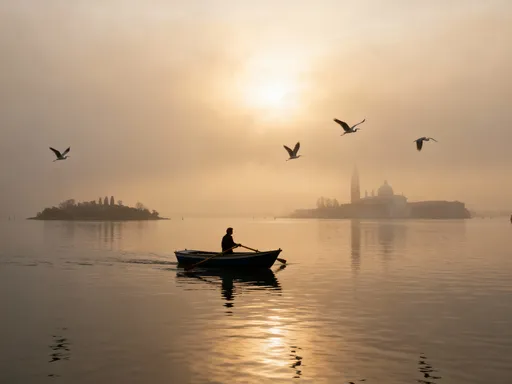
There is a moment, just before sunrise, when the northern lagoon holds its breath. The water lies still, a mirror of pewter and pearl, broken only by the soft ripple of a waking current. Mist curls above the surface like smoke, softening the silhouettes of distant islands. This is the Venice few ever see—a place of silence, solitude, and subtle beauty. Traveling to Vignole and San Michele at dawn offers an escape not just from crowds, but from the very idea of tourism. Here, nature reclaims its voice, and the city feels like a secret whispered on the wind.
Vignole, a small island north of Burano, is cloaked in greenery—olive groves, cypress trees, and wild herbs that scent the air with thyme and rosemary. Once home to a Benedictine monastery, it now belongs more to birds and bees than to people. A narrow footpath loops around its perimeter, winding through abandoned gardens and sun-dappled clearings. Early visitors may spot kingfishers darting like blue sparks over the water or hear the croak of waterfowl hidden in the reeds. The island’s stillness is not emptiness; it is presence—of life lived at nature’s pace.
Adjacent San Michele, often noted as Venice’s cemetery island, is equally serene in the morning light. Its cypress-lined walls and quiet alleys evoke reverence, not sorrow. Dew clings to marble headstones, and the scent of damp stone and flowers lingers in the cool air. But beyond its solemn purpose, San Michele plays a quiet ecological role. Its sheltered shores provide nesting sites for terns and sandpipers, while the surrounding waters host schools of mullet and sea bass. The island is a sanctuary in more than one sense.
Reaching these islands requires intention. Vaporetto Line 13, less frequented than the main routes, connects Murano to Treporti and passes close to both islands. Alighting at the San Michele stop and walking the perimeter offers a contemplative start to the day. For a more immersive experience, private rowing boats—such as traditional sandoli or caorline—allow silent passage through the narrow channels. The rhythm of oars dipping into water enhances the sense of solitude, cutting through the mist like a meditation. Arriving early ensures not just empty pathways, but a rare intimacy with the lagoon’s morning rituals—the first heron lifting into flight, the sun gilding the waves, the distant call of a gull echoing across the water.
Hidden Wetlands of the Southern Lagoon: Nature’s Quiet Refuge
While St. Mark’s Square pulses with tourists and pigeons, the southern reaches of the lagoon unfold in stark contrast—a landscape of wind-swept dunes, salt pans, and whispering reeds. Here, near Pellestrina and the Certosa peninsula, the city’s urban energy fades into the hush of open sky and shallow waters. These areas, often overlooked, are among Venice’s most ecologically significant. They form a natural shield against the Adriatic’s force, absorbing wave energy and stabilizing the coastline. They are also havens for biodiversity, where land and water blur into a mosaic of life.
The marshlands south of the city are dominated by halophytic plants—species adapted to saline conditions. Glassworts, with their succulent green stems, turn fiery red in autumn, painting the flats in vivid streaks. Sea lavender blooms in summer, its delicate purple flowers attracting bees and hoverflies. Reeds and sedges form dense stands that shelter nesting birds and provide cover for young fish. These plants are not merely survivors; they are engineers of stability, their roots binding the sediment and preventing erosion.
Pellestrina, a narrow island separating the lagoon from the sea, is a quiet community where fishing and small-scale agriculture persist. Its lagoon-facing side is lined with wooden fishing huts called casoni, once used by lagoon workers and now often repurposed as eco-tourism stops. Cycling along the island’s quiet paths—possible via bike rental on Lido or brought by ferry—offers an intimate way to explore. The ride is gentle, the wind constant, and the views unobstructed. At low tide, vast expanses of mudflat emerge, glistening under the sun and dotted with the tracks of wading birds.
For those seeking guided access, eco-friendly boat tours depart from Chioggia or Alberoni, offering slow, quiet passage through the southern wetlands. These tours, led by local naturalists, emphasize observation over intrusion. Visitors learn how the lagoon filters water, supports fish populations, and adapts to rising sea levels. Some routes pass near restored salt pans, where traditional salt harvesting is being revived as both a cultural and ecological practice. These areas, once dismissed as barren, are now recognized as vital components of the lagoon’s health—and as places of quiet beauty that reward patient exploration.
The Magic of Off-Season Travel: When Nature Takes Center Stage
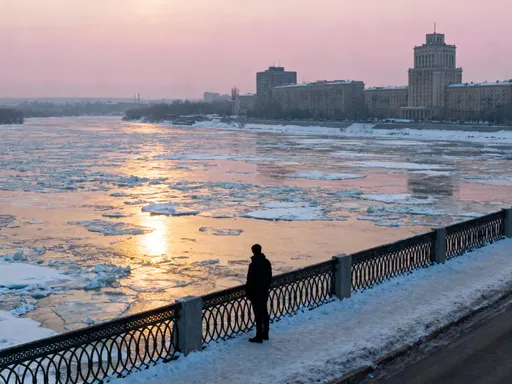
Venice in summer is a spectacle of light and crowds, its canals thronged with gondolas and its squares filled with voices. But in late autumn and winter, the city transforms. Fog drapes the water like gauze. The skies deepen into moody grays and soft pinks. The footsteps of visitors grow sparse, and the city seems to exhale. This is when Venice becomes a place of atmosphere and introspection, where nature asserts its presence without competition. The off-season reveals a different rhythm—one defined by tides, light, and solitude.
Walking alone through the calli at dawn in November or January is an experience of profound stillness. The air is crisp, the stones cool underfoot. Steam rises from manhole covers, and the occasional shutter creaks in the wind. In the quieter neighborhoods—Cannaregio, Castello, Dorsoduro—laundry hangs between buildings, and cats dart through shadowed archways. Locals move with purpose, stopping to chat at corner bakeries or fish markets. This is not the Venice of postcards; it is the Venice of daily life, where the city breathes naturally, unposed and unperformed.
The natural world becomes more visible in these months. Flocks of black-headed gulls gather on empty piazzas. Cormorants perch on wooden pilings, wings outstretched to dry. The acqua alta floods the Piazza San Marco not as a disruption, but as a natural event—water spreading like a slow breath across the stones. With fewer people, there is space to notice these details: the way light reflects off wet pavement, the sound of water lapping against foundations, the sudden flight of a plover from a flooded alley.
Off-season travel also fosters spontaneous connection. Without the pressure of crowded itineraries, visitors can linger in a sunlit campo, sip hot chocolate in a quiet café, or strike up a conversation with a shopkeeper. These moments, small and unscripted, often become the most memorable. They allow for a deeper relationship with the city—one not based on sightseeing, but on presence. By choosing to visit when the crowds recede, travelers gain not just solitude, but a truer sense of Venice as a living place, shaped as much by its people and tides as by its history.
Sustainable Exploration: Moving Like a Local, Lightly on the Land
How we move through a place shapes how we see it—and how we impact it. In Venice, the choice of transportation is not just logistical; it is ethical. Motorized boats, while convenient, create noise, pollution, and wake that erodes fragile shorelines and disturbs wildlife. In contrast, human-powered movement—walking, cycling, rowing—invites a slower, more attentive form of travel. It aligns with the rhythm of the lagoon and deepens sensory awareness. To explore Venice sustainably is to move with respect, not force.
Walking remains the most intimate way to experience the city. The calli, or narrow streets, twist and turn without grid-like order, encouraging discovery. Each bridge crossed offers a new perspective—on water, sky, or hidden gardens. Comfortable shoes and a curious mind are the only requirements. For longer distances across the lagoon, cycling on Lido or Pellestrina provides a seamless way to cover ground while minimizing impact. Bike paths run parallel to the shoreline, offering views of both sea and lagoon. Bicycles can be brought from the mainland or rented locally, and ferries accommodate them with ease.
Perhaps the most poetic option is rowing a traditional Venetian boat. Unlike gondolas, which are steered with a single oar for passengers, smaller craft like the sandolo or topo can be rowed by visitors under guidance. Rowing schools in Venice offer introductory lessons, teaching the voga alla veneta technique—standing upright, facing forward, using a single oar in a fulcrum. This method allows for quiet, efficient movement through narrow canals and open lagoon alike. Gliding through the water under one’s own power fosters a unique connection to the environment—the dip of the oar, the glide of the hull, the absence of engine noise.
Supporting eco-conscious tour operators further enhances responsible travel. Several organizations offer guided lagoon excursions focused on conservation, led by biologists or local fishermen. These tours often include visits to protected areas, discussions on sea level rise, and hands-on activities like reed planting or water quality testing. They provide not just access, but understanding. By choosing low-impact travel, visitors become stewards, not just spectators, contributing to the preservation of Venice’s fragile beauty.
Wild Encounters: Birdwatching and Biodiversity in the City’s Backyard
Venice’s lagoon is a haven for birds, a critical stopover along the Adriatic flyway for migratory species traveling between northern Europe and Africa. Over 300 bird species have been recorded in the area, many thriving in the wetlands, dunes, and shallow waters beyond the tourist core. For birdwatchers and nature lovers, the lagoon offers unparalleled opportunities to observe wildlife in a setting where urban and wild coexist. With patience and quiet, one can witness avocets with their upturned bills probing the mud, glossy ibises stalking the shallows, and even flocks of greater flamingos—pink ghosts in the mist—feeding in remote salt pans.
The Alberoni Dunes, located at the southern tip of Lido, form one of the last natural coastal habitats in the region. This protected area hosts nesting colonies of little terns and Sandwich terns, their sharp calls echoing over the sand. Marram grass stabilizes the dunes, while sea rocket and prickly pear add bursts of color. At dawn, the dunes are alive with skylarks singing overhead and lizards basking on sun-warmed stones. The adjacent salt marshes attract wigeons, shelducks, and marsh harriers, the latter gliding low over the reeds in search of prey.
Further north, the island of Sant’Erasmo—known as the “garden of Venice”—supports orchards, vegetable fields, and patches of wild vegetation that attract insectivorous birds. Its shores and nearby mudflats are ideal for spotting herons, egrets, and black-winged stilts. Observation hides and quiet footpaths allow for close viewing without disturbance. Similarly, the northern lagoon near Burano and Torcello hosts bitterns and kingfishers, the latter flashing like jewels as they dive for fish.
Responsible birdwatching means respecting distance, avoiding nesting areas during breeding season, and minimizing noise. Binoculars or a zoom lens are essential tools, allowing observation without intrusion. Local birdwatching groups and conservation organizations often lead guided walks, sharing knowledge about species behavior and habitat protection. These encounters remind us that Venice is not just a human creation, but a shared space—one where birds, fish, and plants have as much right to belong as visitors or residents.
Reimagining Venice: From Crowded Icon to Living Landscape
Venice has long been viewed as a monument—a city to be preserved, photographed, and admired from a distance. But this perspective risks turning it into a museum piece, frozen in time and stripped of its vitality. To truly appreciate Venice is to see it as a living landscape, one shaped by centuries of interaction between people and nature. It is a place where water is not just a backdrop, but a force; where islands are not static, but shifting; where silence is not absence, but presence.
This shift in perception changes how we travel. Instead of rushing from site to site, we learn to pause. Instead of measuring a visit by how many landmarks we’ve seen, we begin to value what we’ve felt—the cool mist on our skin, the sound of reeds swaying, the sight of a bird taking flight at dawn. We become more mindful, more attuned to the rhythms of the place. And in that awareness, we develop a deeper sense of responsibility.
Preserving Venice is not just about restoring buildings or limiting cruise ships. It is about protecting the lagoon’s delicate ecology, supporting sustainable practices, and choosing to visit in ways that honor its fragility. It means seeking quiet over spectacle, depth over speed, connection over consumption. Every traveler who walks a empty calli at sunrise, who rows a boat in silence, who watches a heron stand motionless in the shallows, becomes part of a quiet movement—one that values Venice not for what it represents, but for what it is.
So let us return to Venice not as tourists, but as witnesses. Let us experience it with breath, with silence, with respect. Let us listen to the whispers of water, and carry their lesson forward: that the most enduring beauty is not built, but lived.