You’ve Never Seen Ireland Like This – Hidden Galway Gems Only Locals Know
Galway is more than just a lively city with street music and cobblestone charm — it’s a gateway to some of Ireland’s most breathtaking yet overlooked scenery. I’ve wandered its alleys and slipped off the tourist trails, discovering quiet cliffs, secret coves, and misty woodlands that rarely make the guidebooks. These hidden scenic spots offer something most travelers miss: raw beauty without the crowds. If you're looking for authentic moments where nature steals the show, this is where Galway truly shines.
Beyond the City: Why Hidden Scenic Spots Define Real Travel
Today’s thoughtful travelers are increasingly moving beyond postcard sights and crowded attractions in search of deeper, more personal experiences. While Galway is renowned for its vibrant arts scene, traditional music sessions, and annual festivals like the Galway International Oyster Festival, many overlook the profound natural beauty quietly unfolding just beyond the city limits. The true soul of a destination often lies not in its busiest squares but in the stillness of a secluded shoreline or the hush of a forest path known only to those who live there.
Seeking out hidden scenic spots is not about rejecting popular landmarks; it’s about expanding the journey. It reflects a growing desire to connect with places on a more intimate level — to hear the wind through coastal grasses, to walk where few footprints remain, and to feel the presence of history in ancient stone walls untouched by tour groups. These experiences foster a sense of discovery that no curated itinerary can fully replicate. They remind us that travel is not just about seeing, but about feeling and remembering.
For women between 30 and 55 — many of whom travel not only for leisure but for renewal — these quiet places hold special significance. They offer space for reflection, a chance to slow down, and an opportunity to reconnect with nature and oneself. Whether traveling solo, with a partner, or with family, finding a hidden cove or a peaceful riverside bench becomes more than a sightseeing stop; it becomes a moment of clarity, a pause in the rhythm of daily life. And in Galway, such moments are not rare — they are waiting just off the main road.
The Wild Atlantic Whisper: Hidden Cliffs and Coastal Paths Near Galway
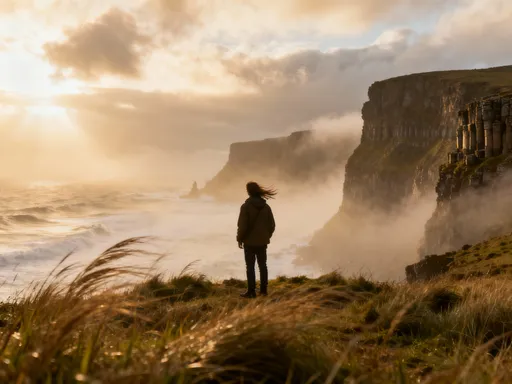
West of Galway City, where the land meets the Atlantic in a dramatic embrace, lie stretches of coastline that few tourists ever see. While the Cliffs of Moher draw thousands daily, quieter alternatives offer equally stunning views without the congestion. Along lesser-traveled routes such as the N6 and N83, adventurous explorers can find isolated coastal paths that follow the edge of the world, where sheep graze on cliffside pastures and the roar of the ocean rises from below.
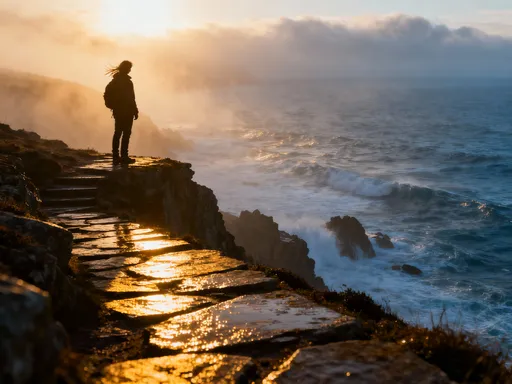
One such path, a quiet extension of the Beara-Breifne Way, winds through County Galway’s rugged western fringe. Here, the terrain is wild and unspoiled — jagged rocks shaped by centuries of wind and salt spray, grass-covered dunes that roll like waves, and sudden vantage points that open onto endless ocean vistas. At sunrise, the cliffs glow in soft gold, and on clear days, the Aran Islands appear like shadows on the horizon. Unlike more famous viewpoints, these spots rarely host more than a handful of visitors, allowing for uninterrupted contemplation of nature’s grandeur.
Safety is essential when exploring these remote areas. Sturdy footwear, weather-appropriate clothing, and awareness of changing tides and coastal erosion are crucial. Many of these paths are not formally maintained, so caution is advised, especially near cliff edges. The best times to visit are early morning or late afternoon, when light casts long shadows across the landscape and solitude is nearly guaranteed. Carrying a map and letting someone know your route are simple but important precautions.
Photographers and nature lovers will find these coastal stretches especially rewarding. The interplay of light and water, the textures of stone and heather, and the occasional sighting of seabirds like puffins or gannets make every turn a potential highlight. And because these areas remain off most travel itineraries, the experience feels personal — as though you’ve been let in on a well-kept secret.
Secret Gardens and Quiet Groves: Nature’s Escape Within the City
Even within Galway City, moments of natural serenity are closer than they appear. Beyond the bustling streets of Shop Street and the lively market at St. Nicholas’ Cathedral, tucked-away green spaces offer quiet retreats for those who know where to look. These are not grand parks with fountains and sculptures, but humble, often overlooked corners where city life fades into the background and nature takes over.
One such haven is found on the campus of the University of Galway. While students hurry between lectures, the university grounds quietly bloom with seasonal beauty — cherry blossoms in spring, golden ginkgo trees in autumn, and winding footpaths lined with ivy and ferns. Near the river Corrib, shaded benches sit beneath ancient oaks, offering views of the water as it flows gently toward the sea. These spaces are used daily by locals but rarely noted in guidebooks, making them perfect for a peaceful morning walk or a quiet read with a thermos of tea.
Another hidden gem is the Franciscan Well Garden, a small, contemplative space tucked behind medieval ruins near the city center. Once part of a Franciscan friary, the garden is now a patch of calm surrounded by stone arches and climbing roses. It’s the kind of place where time seems to slow — where birdsong replaces traffic noise and the scent of damp earth and blooming herbs fills the air. Though small, its atmosphere is profound, offering a sense of stillness that contrasts beautifully with the city’s energy.
Riverside footpaths along the Corrib, particularly those extending westward from the city, provide additional opportunities for quiet exploration. These trails are popular with local joggers and dog walkers, but visitors often miss them entirely. Walking these paths at dawn, when mist hovers above the water and herons stand motionless in the reeds, feels like stepping into a private world. The accessibility of these spaces — free, open year-round, and just minutes from the city center — makes them ideal for travelers seeking balance between culture and calm.
Islands Off the Beaten Path: Exploring Inis Meáin and Omey Island
For those willing to venture further, Galway’s surrounding islands offer some of the most authentic and serene experiences in the region. While Inis Mór attracts the most visitors among the Aran Islands, its quieter sibling, Inis Meáin, remains a place of solitude and tradition. With fewer than 200 residents, this island preserves the rhythms of rural Irish life — stone-walled fields, hand-knit sweaters made in small workshops, and Gaelic spoken in homes and cafes.
Reaching Inis Meáin requires a ferry from Galway or a connecting boat from Inis Mór, but the journey is part of the charm. Upon arrival, visitors are greeted not by souvenir shops but by open skies, rolling hills, and the occasional sheep blocking the path. Walking trails crisscross the island, leading to ancient forts like Dún Chonchúir and hidden beaches where the sand is white and the water clear. Because tourism is low-key, the island retains a sense of authenticity that’s increasingly rare in more commercialized destinations.
Another unique island experience awaits at Omey Island, located just north of Clifden in Connemara — a scenic drive from Galway. At low tide, a natural causeway emerges from the mainland, allowing visitors to walk across the sand and explore this tidal island on foot. The crossing is safe only during specific hours, so checking tide charts is essential. Once on the island, wide beaches stretch in every direction, and the only sounds are the wind and the distant calls of curlews and oystercatchers.
Birdwatchers, photographers, and families alike find Omey Island enchanting. Its isolation creates a sense of adventure, especially for children who delight in crossing the sea floor. Local guides occasionally lead small groups across the causeway, offering insights into the island’s ecology and history. Because it’s not accessible by car or ferry, Omey remains untouched by mass tourism, preserving its wild, windswept character. Visitors are encouraged to take nothing but photos and leave no trace, respecting the fragile dune ecosystem and the privacy of the few residents who live nearby.
Lakes and Loughs: Discovering Galway’s Inland Water Jewels
Galway’s landscape is shaped by water — not just the Atlantic, but a network of lakes, rivers, and loughs that thread through the countryside like silver veins. Lough Corrib, the largest lake in the province of Connacht, is well known to anglers, but many of its secluded bays and inlets remain undiscovered by casual travelers. These quiet corners offer peaceful settings for kayaking, picnicking, or simply sitting in stillness as the water mirrors the sky.
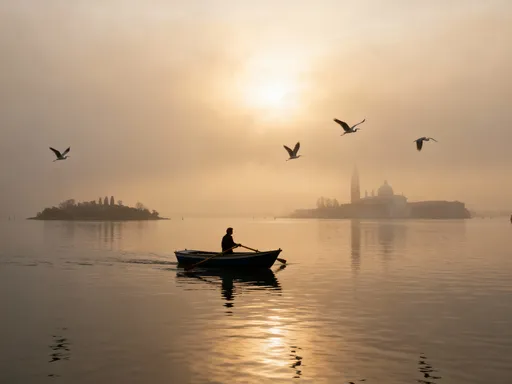
One such spot lies along the eastern shore of Lough Corrib, accessible via a narrow country lane near the village of Oughterard. Here, a small, informal dock provides access to the water, and on calm mornings, the lake’s surface becomes a perfect reflection of the surrounding hills and clouds. Rowing or paddling quietly through these waters, you might spot kingfishers darting between reeds or a heron lifting slowly into flight. The sense of solitude is profound — it’s easy to believe you’re the only person for miles.
Further west, in the heart of Connemara, lies Lough Inagh, cradled by the Twelve Bens mountain range. This glacial lake is part of a larger valley system that feels almost otherworldly in its beauty. Surrounded by peat bogs, heather-covered slopes, and rushing streams, Lough Inagh is a destination for those who appreciate raw, untamed landscapes. The nearby village of Leenaun, small and unassuming, serves as a quiet base for exploring the area. It offers a few cozy guesthouses, a local pub with homemade stew, and access to walking trails that lead into the mountains.
For families or solo travelers, a day spent by one of these loughs can be deeply restorative. Packing a simple lunch, bringing a blanket, and finding a quiet shore to sit on becomes an event in itself. There are no admission fees, no crowds, and no schedules — just the rhythm of nature. Kayak rentals are available in select locations, and guided tours sometimes operate during the summer months, offering safe and informative ways to explore the waterways.
The Art of Getting Lost: How to Find Your Own Hidden Spot
Some of the most memorable discoveries happen not through planning, but through wandering. The art of finding hidden scenic spots lies in embracing uncertainty, trusting intuition, and being open to detours. Modern navigation tools can guide us, but the real magic often comes from turning down an unmarked road, following a footpath that appears on no map, or taking advice from a local shopkeeper who remembers when the road was just a cow path.
Offline maps, such as those available through apps like Maps.me or Gaia GPS, are invaluable for exploring rural areas where signal is weak. These tools allow travelers to download maps in advance and track their location without relying on internet access. Marking points of interest — a scenic overlook, a quiet beach, a historic ruin — helps build a personal guide to the region. But equally important is the willingness to put the phone away and simply observe.
Conversations with locals often lead to the best discoveries. A farmer repairing a stone wall might point to a footpath that leads to a hilltop with panoramic views. A bookstore owner might mention a hidden waterfall known only to residents. These moments of human connection enrich the journey, transforming a simple trip into a story worth telling. Asking open-ended questions — “Where do you go to relax?” or “What’s your favorite place near here?” — often yields more meaningful answers than any online search.
Cycling is another excellent way to uncover hidden corners. On a bike, you move fast enough to cover distance but slowly enough to notice details — a blooming wildflower, a crumbling cottage, a narrow lane leading to the sea. Quiet country roads radiating from Galway City and towns like Clifden and Spiddal offer safe and scenic routes for riders of all levels. Many rental shops provide maps of recommended loops, often highlighting lesser-known attractions.
The key is to travel with curiosity rather than checklist. Letting go of rigid plans allows space for spontaneity — for stopping at a roadside café because the scones smell divine, or pausing to watch a flock of swans land on a lake at dusk. These unplanned moments often become the most cherished memories of a trip.
Responsible Wandering: Preserving Galway’s Hidden Beauty
With the privilege of discovering hidden scenic spots comes the responsibility to protect them. As more travelers seek out quiet places, the risk of overuse and environmental damage increases. The very qualities that make these locations special — their solitude, their natural state, their sense of untouched beauty — are also what make them vulnerable.
Practicing mindful travel means leaving no trace. This includes packing out all litter, avoiding shortcuts that erode footpaths, and refraining from picking plants or disturbing wildlife. On tidal islands like Omey, staying on marked paths helps protect fragile dune systems. At lakes and rivers, using reusable containers and avoiding soap near the water preserves water quality for both wildlife and future visitors.
Respecting private land is equally important. Many hidden paths cross working farms or pass near homes. Always look for gates, follow signage, and never trespass. If a path is closed, accept it gracefully — it may be for lambing season or private use. A simple wave or thank-you to a landowner can go a long way in maintaining goodwill and preserving access.
Supporting local communities is another form of stewardship. Buying coffee from a village café, purchasing a hand-knit scarf from a small shop, or staying at a family-run guesthouse ensures that tourism benefits those who live in these areas. It fosters a sense of welcome and encourages locals to continue sharing their knowledge and spaces with respectful visitors.
The true magic of Galway’s hidden scenic spots lies not just in seeing them, but in helping preserve them. Every quiet cove, every windswept hill, every hidden garden holds the potential to become a lifelong memory — not because it was famous, but because it was found. And when we protect these places, we ensure that others, too, will have the chance to stand at the edge of the Atlantic, breathe in the salt air, and feel, for a moment, that they’ve discovered something truly their own.