How I Regained My Balance – A Real Talk Guide to Everyday Stability
Balance isn’t just about standing on one foot—it’s how we move, walk, and live without fear of falling. After a minor injury left me shaky and unsteady, I started rehabilitation training that changed everything. This guide shares what actually worked, why balance matters more than you think, and simple, science-backed moves anyone can try. No fluff, no fake promises—just real progress from someone who’s been there. It began not with a dramatic fall, but with a stumble—just a misstep on the sidewalk. Yet that moment revealed something deeper: my body no longer responded the way it once did. The confidence I once had in my own movement was gone. What followed was a journey back to stability, guided by professionals, grounded in science, and built on daily practice. This is not a miracle cure. It’s a realistic path anyone can take.
The Hidden Crisis of Poor Balance
Beyond the obvious risks of falling, poor balance quietly undermines independence, confidence, and quality of life. Most people don’t realize how much they rely on balance until it starts to fail. A slight wobble going up the stairs, an awkward pause when stepping off a curb, or needing to hold onto the counter while putting on socks—these are not just minor inconveniences. They are early warning signs. For many women between 30 and 55, the shift often begins subtly, masked by busy schedules, sedentary jobs, or recovery from pregnancy and childbirth. Physical changes, reduced activity, or even prolonged periods of wearing flat shoes or standing in one place can weaken the systems that keep us steady.
The truth is, balance declines with inactivity, not just age. While aging does affect muscle strength and sensory processing, lifestyle plays a far greater role than many assume. A 2023 study published in the Journal of the American Geriatrics Society found that adults who engaged in less than 30 minutes of daily movement were twice as likely to experience balance-related incidents, even in their 40s. This isn’t limited to older adults—parents juggling work and home life, professionals spending hours at a desk, or anyone recovering from an injury may already be at risk. The danger lies in normalizing these small stumbles, dismissing them as “just a clumsy moment,” when in fact they signal a system in need of attention.
Common contributors to poor balance include weakened leg muscles, reduced core stability, inner ear disturbances, vision changes, and lack of coordination between sensory inputs. Post-injury weakness—such as after an ankle sprain or knee procedure—can also disrupt the body’s natural feedback loops. Even something as simple as prolonged sitting alters how the brain communicates with the feet and legs, dulling the reflexes needed for smooth, confident movement. The good news? Balance is not a fixed trait. It is a skill, much like learning to ride a bike or mastering a new recipe. With the right approach, it can be retrained, strengthened, and restored at any stage of life.
Why Balance Is More Than Just Stability
Balancing on one foot may seem like a simple physical act, but it involves a complex network of systems working in harmony. The body maintains equilibrium through three primary inputs: the inner ear (vestibular system), vision, and proprioception—the body’s ability to sense where its parts are in space. When you stand still, your inner ear detects motion and head position, your eyes confirm your surroundings, and your muscles and joints send constant feedback about pressure and alignment. These signals travel to the brain, which processes them in real time to make tiny adjustments—shifting weight, tightening muscles, or changing posture—often without conscious thought.
Think of it like your body’s GPS: it constantly recalibrates based on terrain, speed, and environment. When one input is compromised—say, poor lighting limits vision, or an ear infection affects the vestibular system—the brain must rely more heavily on the others. This is why standing with your eyes closed is significantly harder; you’ve removed a critical data source. Over time, if the brain isn’t regularly challenged to integrate these signals, the system becomes less efficient. That’s why people who avoid uneven surfaces, always wear supportive shoes, or never practice balance exercises may struggle when conditions change—like walking on gravel or stepping onto a moving bus.
Beyond preventing falls, good balance supports overall physical coordination, improves posture, and enhances confidence in daily movement. It affects how you carry groceries, play with children, garden, or simply walk across a room. Strong balance means less reliance on furniture for support, fewer moments of hesitation, and greater ease in multitasking—like carrying a tray while navigating a crowded kitchen. For women managing households and careers, this translates into more energy, less physical strain, and a stronger sense of control. Research from the National Institutes of Health shows that individuals with better balance report higher levels of independence and life satisfaction, particularly as they move into midlife and beyond.
Moreover, balance training engages the core, strengthens the lower limbs, and improves neuromuscular communication—the connection between the brain and muscles. This means that every time you challenge your stability, you’re also building functional strength that supports everyday activities. Unlike isolated strength training, balance work trains the body to respond dynamically, preparing it for real-world demands. It’s not about being athletic; it’s about being capable. And the earlier you begin, the more resilient your system becomes against future decline.
My Turning Point: Starting Rehab After a Setback
It started with a fall—nothing serious, just a slip on a wet kitchen floor. I caught myself before hitting the ground, but the moment left me shaken. Not from pain, but from fear. For days afterward, I found myself gripping railings more tightly, avoiding uneven sidewalks, and hesitating before stepping off curbs. What surprised me most was how quickly my confidence eroded. I had always considered myself active and steady on my feet, but that single incident revealed a vulnerability I hadn’t acknowledged. I began to notice small things: my feet felt heavier, my steps less assured, and I caught myself using the counter for support more often than before.
The emotional impact was just as real as the physical one. I didn’t want to admit I needed help. I worried about being perceived as fragile or overly cautious. But the truth was, I was limiting myself—avoiding walks with friends, skipping errands, and even declining invitations to events with stairs. The more I restricted my movement, the weaker I felt. It was a cycle: less activity led to weaker muscles, which led to less confidence, which led to even less movement. I realized I couldn’t wait for things to improve on their own. I needed a plan, and more importantly, professional guidance.
I reached out to a physical therapist, someone trained in movement rehabilitation. Our first session wasn’t about intense exercises or dramatic fixes. Instead, it was an assessment—measuring my stance, observing my gait, testing my reaction to small shifts in balance. She explained that my core and ankle stabilizers had weakened, likely due to months of reduced activity during a period of high stress. The good news? These muscles could be retrained. She emphasized that recovery wasn’t about pushing harder, but about rebuilding awareness and control. We started with basic, low-risk exercises, always prioritizing form and safety over intensity.
One of the most important lessons was learning to listen to my body. I had spent years ignoring small discomforts, pushing through fatigue, and prioritizing productivity over physical well-being. Rehabilitation taught me to slow down, focus on alignment, and appreciate progress in small increments. My therapist also stressed the importance of consistency—doing a little every day was far more effective than occasional intense sessions. Over time, I began to notice changes: standing felt more stable, walking required less mental effort, and the fear of falling gradually diminished. That experience shaped my understanding: balance isn’t just physical. It’s mental, emotional, and deeply personal.
The Core Principles of Effective Balance Training
Rebuilding balance isn’t about complex routines or expensive equipment. It’s built on three foundational principles: consistency, progression, and body awareness. Consistency means showing up every day, even if only for a few minutes. The nervous system learns through repetition, and small, frequent practices create stronger neural pathways than sporadic, longer sessions. Just five to ten minutes a day—standing on one leg while brushing your teeth, practicing heel-to-toe walks during a commercial break—can yield measurable improvements over time. The key is making it part of your routine, not an extra task to check off.
Progression is equally important. The body adapts quickly, so exercises must gradually increase in difficulty to remain effective. Starting with two feet on the ground is perfectly appropriate. Once that feels stable, you can close your eyes, stand on a cushion, or add arm movements to challenge your system further. The goal is to stay just outside your comfort zone—challenged but not overwhelmed. Rushing this process increases the risk of falls or injury. It’s better to master one level before advancing. For example, if you can stand on one leg for 20 seconds with your eyes open, try reducing support by holding onto a chair with just one finger, then eventually letting go completely.
Body awareness—the ability to sense your position and movement—is the third pillar. Many people go through daily life on autopilot, disconnected from how their body is moving. Balance training brings attention back to posture, foot placement, and muscle engagement. Simple cues like “lift the arches of your feet,” “engage your core,” or “keep your gaze forward” help build this awareness. Slowing down movements allows the brain to process feedback more clearly. This mindful approach not only improves balance but also reduces tension and enhances overall body control.
Safety is non-negotiable. Always practice near a stable surface like a counter, wall, or sturdy chair. Wear supportive, flat shoes or go barefoot on a non-slip surface. Avoid high-risk environments like slippery floors or dimly lit rooms. If you have a history of falls, dizziness, or medical conditions like neuropathy or vertigo, consult a healthcare provider before beginning any program. Physical therapists can design personalized plans that address specific weaknesses and ensure exercises are appropriate for your level. Remember, the goal is not speed or intensity—it’s sustainable, long-term improvement.
4 Foundational Exercises That Actually Work
After months of guided practice and daily commitment, four exercises emerged as the most effective for rebuilding balance. These are not flashy or complicated, but they target the core systems needed for stability. Each one can be modified to suit different fitness levels, making them accessible whether you’re just starting out or looking to maintain strength.
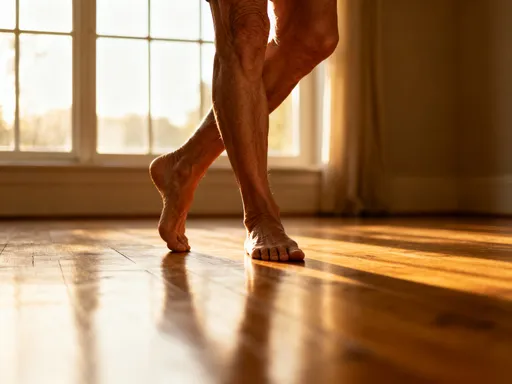
The first is the single-leg stance. Stand behind a chair, holding the backrest lightly for support. Shift your weight onto one foot and slowly lift the other, keeping your knee slightly bent. Aim to hold for 20–30 seconds, then switch sides. Focus on keeping your standing knee soft, not locked, and your pelvis level. Common mistakes include holding your breath, gripping the chair too tightly, or letting your hips sag. Start with shorter holds and build gradually. This exercise strengthens the ankle stabilizers and improves proprioception—the sense of where your foot is in space.
Next is the heel-to-toe walk, also known as the tandem walk. Walk in a straight line, placing the heel of one foot directly in front of the toes of the other, like walking on a tightrope. Take 10–20 steps, using a wall for light support if needed. This challenges dynamic balance—your ability to stay steady while moving. It also improves coordination between your legs and trains your eyes to focus on a fixed point ahead, which helps with spatial orientation. If this feels too difficult, widen your stance slightly or practice near a countertop.
The sit-to-stand exercise builds lower body strength and control. Sit in a sturdy chair with your feet flat on the floor. Cross your arms over your chest and slowly stand up without using your hands. Lower yourself back down with control. This movement engages the glutes, quadriceps, and core—muscles essential for balance and mobility. If full sit-to-stands are challenging, start by using your hands for support, then gradually reduce assistance. Perform 8–10 repetitions, focusing on smooth, steady motion.
Finally, weight shifts help train your body to adjust to movement. Stand with feet hip-width apart, holding a chair for support. Slowly shift your weight onto your right foot, lifting your left foot slightly off the ground. Return to center, then shift to the left. You can also move forward and backward, shifting weight from heels to toes. This exercise improves weight distribution and prepares your body for unexpected shifts, like stepping off a curb or catching yourself during a stumble. Aim for 10 shifts in each direction, moving slowly and with control.
Bringing Balance Into Daily Life
One of the most powerful aspects of balance training is that it doesn’t require extra time or equipment. The real progress happens when you integrate awareness into everyday activities. Simple habits—like standing on one leg while waiting for the kettle to boil, walking barefoot on safe surfaces at home, or practicing mindful stair climbing—turn routine moments into training opportunities. These micro-movements add up, reinforcing neural pathways and building muscle memory without disrupting your schedule.
Environmental awareness also plays a key role. Good lighting, non-slip flooring, and supportive footwear can significantly reduce fall risk. Avoid walking in socks on hardwood or tile—opt for shoes with rubber soles or slippers with grip. When navigating dimly lit areas, use nightlights or motion-sensor lamps. Pay attention to cluttered walkways, loose rugs, or uneven surfaces, especially in high-traffic areas like hallways and bathrooms. These small adjustments create a safer environment and reduce the cognitive load on your balance system.
Mindful walking is another powerful tool. Instead of rushing, focus on your stride: heel to toe, arms swinging naturally, head upright. Avoid looking down at your feet—this disrupts your visual input and throws off alignment. Instead, pick a point ahead and walk toward it. This not only improves balance but also enhances posture and breathing. When carrying items, distribute weight evenly and avoid overloading one side, which can pull your center of gravity off track.
Creating a habit loop can help sustain progress. Pair balance practice with an existing routine—like doing heel-to-toe walks after brushing your teeth or practicing sit-to-stands during TV commercials. Use a simple journal or notes app to track daily efforts. Seeing your consistency in writing reinforces motivation and makes progress tangible. Over time, these small actions become automatic, supporting long-term stability and confidence.
Tracking Progress and Staying Motivated
Motivation often fades when results aren’t immediate. Balance improvements are subtle—they show up as fewer stumbles, easier navigation of crowded spaces, or increased confidence on uneven ground. To stay encouraged, track progress in practical ways. Time how long you can stand on one leg with your eyes open, then closed. Note how many times you catch yourself wobbling during the week. Observe whether you feel more stable when carrying laundry or stepping into the shower. These real-world markers are more meaningful than numbers on a scale.
Keeping a simple log helps. Write down what you did each day—“30 seconds single-leg stance, right leg,” or “10 heel-to-toe steps in hallway.” You don’t need a detailed diary; just a few words to acknowledge your effort. Over time, you’ll see patterns: longer holds, fewer corrections, smoother movements. If you miss a day, don’t judge yourself. Progress isn’t linear. The goal is consistency over perfection.
Setbacks are normal. There may be days when you feel less steady, especially if you’re tired, stressed, or recovering from illness. On those days, scale back—do a shorter session, use more support, or focus on breathing and alignment. What matters is showing up. Celebrate small wins: standing without holding on, walking without looking down, or simply feeling more aware of your body. These are real victories.
Remember, balance is not a destination. It’s a lifelong skill, like nutrition or sleep, that requires ongoing attention. The investment pays off in independence, confidence, and peace of mind. You’re not just preventing falls—you’re reclaiming the freedom to move through the world with ease. And that’s worth every small step.
True stability starts with small, intentional steps. This guide isn’t about perfection—it’s about progress, awareness, and reclaiming control over how you move through the world. With safe, sustainable training, better balance is within reach for anyone willing to try. It’s not about age, fitness level, or past injuries. It’s about showing up, paying attention, and trusting that your body can adapt. The journey back to balance begins not with a dramatic change, but with a quiet decision—to stand a little taller, move a little more mindfully, and believe that stability is possible. And it is.